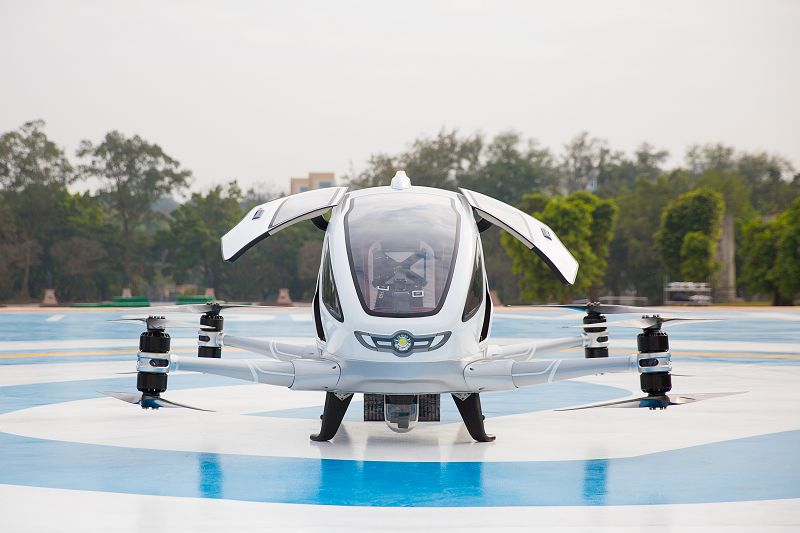
The Nicosia pilot focuses on integrating aerial mobility services with existing road-based transport to enhance urban passenger and freight mobility.
It explores the quantitative and qualitative benefits of introducing Unmanned Aerial Vehicle (UAV)-based services and their interaction with multimodal transport systems already operating in the city. The pilot investigates UAV-based passenger and freight operations, including a “park & fly” concept supported by the optimal placement of vertiports that connect aerial services with road-based mobility options. In parallel, UAV-based traffic monitoring is examined, using drone-mounted cameras as airborne sensors to provide a comprehensive, bird’s-eye view of the urban road network and complement existing ground-based monitoring systems.
The demonstration environment builds on a wide range of urban mobility services in Nicosia, including public bus transport, Park & Ride and Demand Responsive Transport services, bicycle sharing, and e-scooter rental. Two UAVs are used for testing and demonstration activities. Feasibility and impacts are assessed through a combination of small-scale field trials and large-scale simulation, using SUMO-based mobility and traffic models available in the Intelligent Transportation Systems testbed at the University of Cyprus. Within FEDORA, the pilot explores UAV path planning, response planning, and high-resolution incident data collection, alongside simulation-based evaluation of emerging aerial mobility services and their integration with road transport.